Heat Illness Prevention for Washington Employers
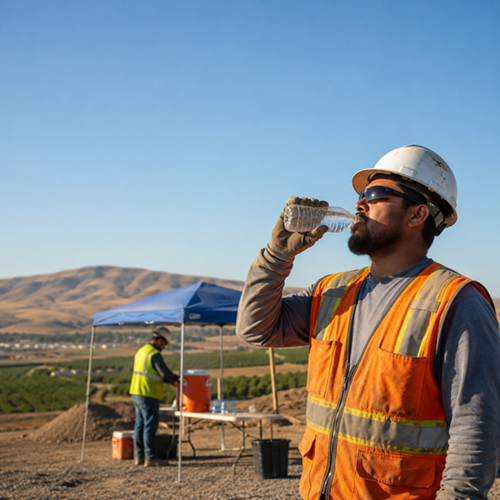
Washington employers are required to actively prevent heat illness, not just respond to it. Under state rule WAC 296-62-095, once outdoor temperatures reach 80°F you have to provide cool drinking water, shade, paid cool-down rests, an acclimatization plan for new and returning workers, and heat-illness training for both crews and supervisors. These rules run year-round, not just in summer. Indoor heat in warehouses, kitchens, and shops is not covered by a specific temperature standard, but your general duty to keep workers safe still applies. Compliance is only part of it, though. Your people are your most important asset: protect them, build a quality heat illness prevention system, and you are on your way to operational excellence.
What does Washington's outdoor heat rule require?
The rule requires a written prevention plan plus water, shade, rest, acclimatization, training, and active observation of workers. Washington regulates outdoor heat under WAC 296-62-095 for general industry and WAC 296-307-097 for agriculture. Since the permanent rules took effect in July 2023, they apply year-round instead of only May through September. You do not have to measure or record temperatures, but once conditions cross the action level, the protections are mandatory.
At what temperature do the heat rules take effect?
For most outdoor work the action level is 80°F, lowered from the old 89°F threshold. If workers wear nonbreathable clothing such as vapor-barrier suits or chemical-resistant PPE, the threshold drops to 52°F. The rules apply every month of the year, so an unseasonably warm spring or fall day counts the same as a July afternoon in the Yakima Valley.
How do you prevent heat illness on a Washington worksite?
To stay ahead of heat illness, build the plan, supply water and shade, acclimatize new workers, train everyone, and watch for early symptoms. Here is the order that works:
- Write an outdoor heat exposure prevention plan and fold it into your accident prevention program.
- Provide one quart of cool drinking water per worker per hour, and make sure people actually drink it.
- Provide real shade (genuine blockage of direct sun) and make paid cool-down rests normal, not something workers feel they have to earn.
- Acclimatize new and returning workers gradually, and watch them closely for their first 14 days in the heat.
- Train crews and supervisors before hot work starts, in a language each person understands.
- Pair workers with a buddy so symptoms get caught early, before someone goes down.
What are the signs of heat illness, and what should a supervisor do?
If a worker shows signs of heat illness, stop the work and start cooling the person immediately. Warning signs include confusion, dizziness, nausea, weakness, heavy sweating, and loss of coordination. A supervisor should move the worker to shade or a cool area, give water, cool them actively, and call for medical help if symptoms are severe or not improving. Andrew Lange, A/F's safety lead, puts it as a simple test: can every one of your supervisors explain, right now, what to do the moment someone starts showing symptoms? If the answer is no, that is a training gap, not a paperwork gap, and it is the one that gets people hurt.
Does the heat rule cover indoor work like warehouses and kitchens?
Washington's numeric heat rule covers outdoor work, so warehouses, food-processing lines, commercial kitchens, delivery vehicles, and shops are not governed by the 80°F action level. That does not make indoor heat a non-issue. Employers still carry a general duty to protect workers from recognized hazards, and heat inside a metal building or behind heavy PPE can climb well past what is safe. In the Yakima Valley, summer often stacks heat on top of wildfire smoke, which hits outdoor crews and poorly ventilated indoor spaces at the same time. Both belong in your summer safety plan.
Real talk: a written plan is not the same as a ready crew
Most heat citations do not come from companies with no plan. They come from companies that have a plan sitting in a binder while supervisors on the floor cannot execute it under pressure. The two pieces that get skipped most are acclimatization, because it slows down a new hire's first week, and supervisor readiness, because everyone assumes the crew lead already knows. Close those two gaps and you have handled most of your real exposure.
Get your crew ready before the next hot stretch
A/F Business Solutions builds heat-illness prevention into practical, on-site safety training and certification for crews and supervisors across Yakima and Central Washington, and can write the prevention plan and documentation that the rule requires. Not sure where your gaps are? Work through the monthly workplace safety checklist, get your chemical program in order with the 2026 HazCom midyear review, and make sure your team is ready for an emergency with CPR, First Aid, and AED training. See the full range of safety services, or call Andrew for safety at (509) 654-0332.
Frequently asked questions
At what temperature do Washington's heat rules apply?
The action level is 80°F for most outdoor work and 52°F for workers in nonbreathable clothing or vapor-barrier PPE. Once conditions reach those temperatures, the required protections apply.
Are Washington's heat rules only in effect during summer?
No. Since the permanent rules took effect in July 2023, they apply year-round rather than only from May through September.
Do the heat rules apply to indoor workers?
The specific outdoor heat rule does not cover indoor work, but employers still have a general duty to protect indoor workers from dangerous heat in warehouses, kitchens, and similar spaces.
How much water do employers have to provide?
Employers must provide at least one quart of cool drinking water per worker per hour and make sure workers have the chance to drink it.
Who needs heat-illness training?
Both employees and supervisors must be trained before working above the temperature threshold, in a language each person understands.