
Inspections that teach, not just catch.
Facility walkthroughs, industrial hygiene, and exposure assessments paired with the hands-on labor to actually close the gaps we find.
"I am not running gotcha audits. I am trying to create leaders, train people to be better at keeping their employees healthy and safe, and help everyone care about the environment they work in."

What it is
Overview
Most consultants identify problems, issue reports, and disappear. The business is left holding a giant list and no resources to fix anything. That is not how operational safety actually improves.
A/F Business Solutions approaches every inspection as both a teaching opportunity and a closing opportunity. Findings are prioritized by danger, frequency, exposure, and cost. And when railing needs to be installed, signage labeled, or guarding fabricated, the team will pick up the tools and do the work.
Inside the engagement
Solutions
- Facility safety walkthroughs and operational audits
- Jobsite inspections for construction and project work
- Machine guarding, entanglement, and pinch point reviews
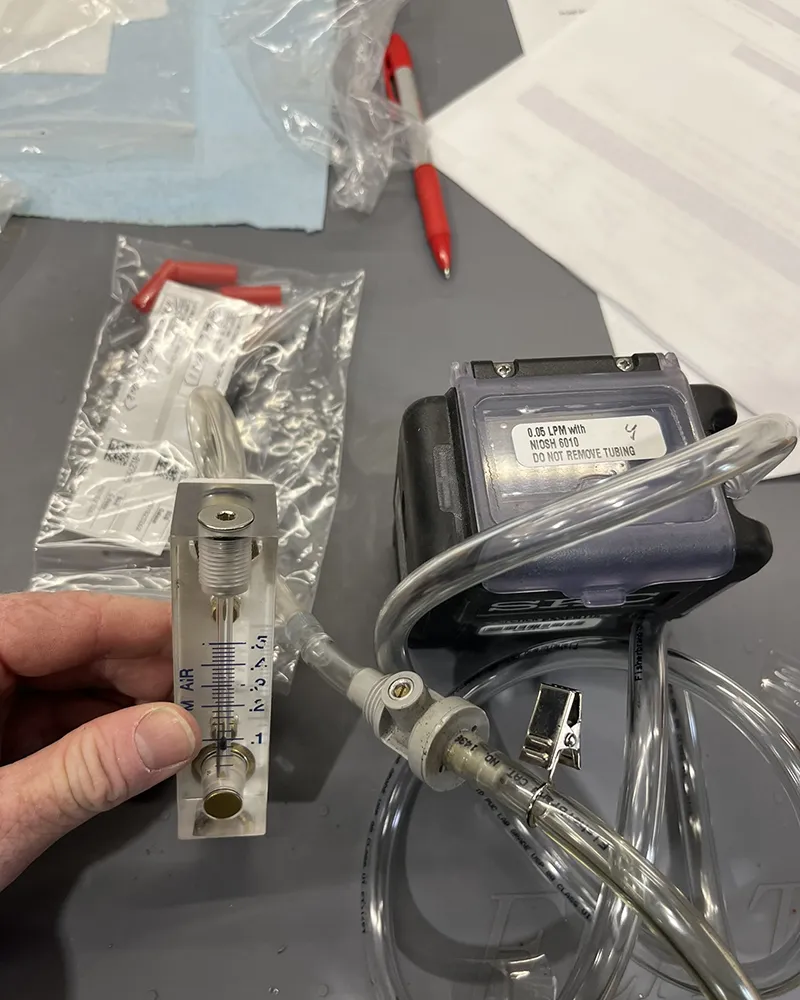
- Industrial hygiene exposure assessments (noise, air, chemical)
- Wastewater, stormwater, and air emission sampling
- Active shooter and facility security assessments
- Fleet safety inspections and policy reviews
- Gas leak detection and 4-gas monitoring
- Hands-on installation of railing, guarding, signage, and labeling
- Eyewash station maintenance and first-aid kit refills
Tangible outputs
Deliverables
- Written inspection report with photos and findings
- Prioritized corrective action list by severity, frequency, and cost
- Industrial hygiene sampling results and analysis
- Hands-on installation of railing, signage, guarding, and labeling
- Active shooter and security assessment reports
- Follow-up verification and continuous improvement planning
Best fit
Who this is for
- Operations preparing for an L&I, OSHA, or DOE inspection
- Companies needing baseline industrial hygiene exposure data
- Businesses without an in-house maintenance team to implement fixes
- Multi-site organizations needing consistent inspection cadence
- Leadership teams investing in continuous operational improvement
Process
How it works
Each engagement follows a clear, predictable path.
Inspection scope & focus areas
Define inspection scope based on operation, history, and exposure. Focus on the mechanical, electrical, structural, and environmental hazards that the operation has stopped noticing because the team sees them every day.
Field walkthrough & sampling
Walk the facility or jobsite with eyes trained on machine guarding, pinch points, entanglements, energy systems, and structural conditions. Pair the visual review with industrial hygiene sampling when exposure data is needed.
Prioritized findings report
Deliver a prioritized findings report ranked by danger, frequency, exposure, and cost-to-correct. Avoid overwhelming leadership with a giant list. Sequence the corrective actions so the operation can actually act on them.
Hands-on corrective action support
When the business lacks manpower, time, or expertise to close the gap, pick up the tools. Install railing, signage, guarding, and labeling. Paint, drain eyewash stations, refill first-aid kits. Don't just identify the work - do the work.
Verification & continuous improvement
Verify completion of corrective actions. Re-test exposure data where applicable. Plan the next inspection cycle as part of ongoing operational improvement rather than treating the visit as a one-off audit.
Common questions
Questions about this service
Real questions from business owners and operations leaders.
Findings are prioritized by severity, frequency, exposure, and cost-to-correct. The corrective action plan is sequenced so the business can actually act on it - dangerous gaps first, then engineering improvements, then operational refinements over time.
Yes. Industrial hygiene assessments cover noise exposure, air quality, chemical exposure, and other long-term occupational health hazards. Sampling strategy is built around the operation, processes, and potential cross-contamination pathways.
Yes. When the business lacks manpower, time, or expertise, the team will pick up tools and do the work. Railing installation, signage labeling, machine guarding, painting, and operational safety improvements are part of how findings actually get closed.
It depends on the goal. One-time inspections are useful for citation prep or baseline assessments. Recurring inspections build operational discipline. Retainer engagements typically include a defined inspection cadence as part of the rhythm.
Yes. A written report with photos, findings, and prioritized corrective action recommendations is delivered after every inspection. The report serves as the basis for closing gaps and tracking continuous improvement over time.
Long-term partnership
Make safety leadership part of every month
Retainer support builds culture instead of just closing gaps. Recurring inspections, training, policy work, and on-call guidance, scaled to the size of your operation.
- Embedded in your operation
- Recurring inspections and audits
- Training rolled into the engagement
- Policy work and document maintenance
- Scaled to operation size
- Accountability on both sides
Get in touch
Ready to talk through your operation?
Every engagement starts with a discovery conversation. No pressure, no upsell, just an honest look at where you are and what would actually help.